Physical Address
304 North Cardinal St.
Dorchester Center, MA 02124
Physical Address
304 North Cardinal St.
Dorchester Center, MA 02124

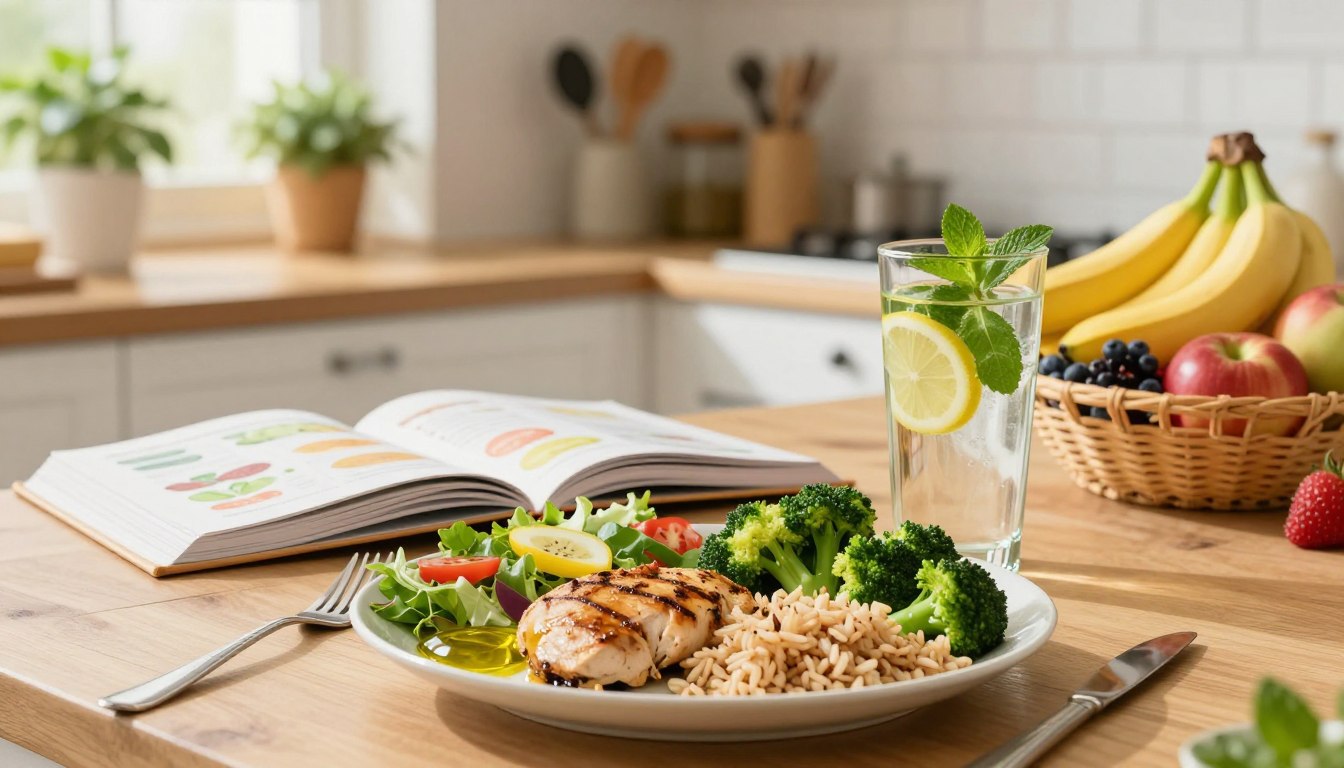
Did you know your body is experiencing its second largest growth spurt since you were a baby? This rapid change demands serious fuel.
Good nutrition is absolutely critical for teens. Your body and brain are developing at a fast pace. This means your energy and nutrient needs are higher than almost any other time in life.
Think of yourself as a high-performance vehicle. You need premium food to run smoothly, grow strong, and crush your fitness goals. Whether you’re an athlete or just active, what you eat powers your entire day.
This guide is about empowerment. We’ll show how healthy eating builds a stronger you. You’ll learn about vital protein, smart carbohydrates, and essential vitamins and minerals. We provide simple meal options and great sources like vegetables and nuts.
Adolescence is a period of intense physical and mental development that sets the stage for your adult health. What you eat now directly powers this incredible transformation. Good nutrition for adolescents is the bedrock of everything from your athletic performance to how you feel each day.
It’s about more than just managing your weight. It’s about providing premium fuel for your changing body and developing brain. Let’s explore why this time is so unique.
Your body isn’t just getting taller. It’s building new lean body mass—muscle, bones, and organs. This requires a major boost in calories and specific nutrients.
Most girls complete their growth between ages 16 and 18. They gain about 3.5 inches and 21 pounds on average. Guys often keep growing until 18-20, adding around 4 inches and 34 pounds!
This rapid change demands consistent, high-quality fuel. Think of protein from eggs, meat, fish, and beans as essential building blocks. Calcium from dairy and vitamin D work together to construct a strong skeleton.
What you eat directly powers your brain. Skipping meals or choosing too many processed foods can lead to foggy thinking, irritability, and low energy in class.
On the flip side, a steady intake of the right food enhances cognitive function and mood. Evidence shows that a healthy breakfast and proper hydration can improve academic performance. They may reduce absenteeism and help you tackle a tough test.
Iron-rich foods like lean red meat and leafy vegetables support blood health, which carries oxygen to your brain. Smart carbohydrates from whole grains provide stable energy for your heart and muscles.
Hydration is also important. So is including a mix of nuts and seeds in your week. Planning a balanced lunch and meal prep sets you up for success.
By nourishing both your growing body and developing mind, you create a foundation for peak performance in every part of your life.
Your body is a construction zone right now. The right nutrients are the essential tools and materials it needs. This team of power players supports explosive growth, steady energy, and a resilient, strong body.
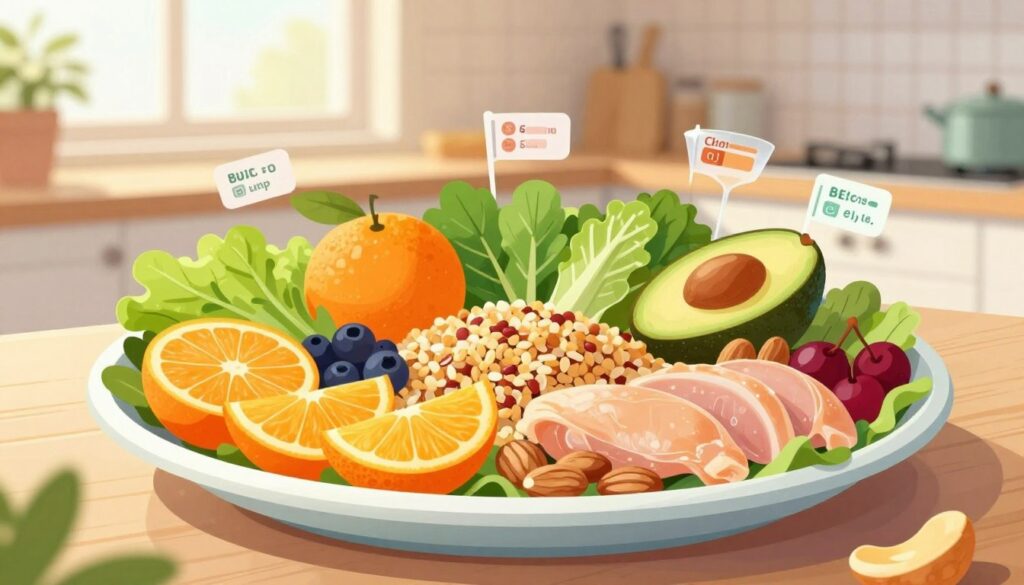
Let’s meet the VIPs of your plate. Understanding them helps you make choices that fuel your fitness and overall health.
Iron is a superstar mineral. It creates red blood cells that carry oxygen to your muscles. This is especially important for teen girls, who lose iron during menstruation.
Low iron can zap your energy and focus. For best absorption, choose heme iron from animal sources.
Pair these with vitamin C-rich food like bell peppers or oranges to boost uptake.
Protein is your body’s raw building material. It repairs and builds every cell, from muscle to brain tissue. Get your power from these sources:
Your skeleton is doing its heaviest banking right now. Calcium is the mineral deposit, with a daily needs of 1,300 mg. Vitamin D (600 IU per day) is the key that unlocks its use.
Together, they build dense, strong bones for life. They also support your immune system and heart health.
Great calcium sources include:
For Vitamin D, aim for safe sun exposure. Also, eat fortified foods or consider a supplement if recommended.
Don’t fear carbs or fats. Just choose them wisely. Smart carbohydrates are your main energy source.
Focus on high-fiber options like whole grains, fruits, and veggies. They provide lasting fuel for your brain and workouts.
Healthy fats protect your heart and balance hormones. Prioritize plant-based fats and fish.
Limit saturated fats from red meat and processed foods.
A balanced plate includes a mix of all three macronutrients. A good plan aims for 45-65% carbohydrates, 25-35% fats, and 10-30% protein. This ensures you get the vitamins and minerals necessary for optimal function.
Imagine having a clear, visual blueprint for every meal that ensures you get all the nutrients you need. This section turns knowledge into action. We provide a straightforward framework for your meals.
It supports your activity level and brain power. Forget strict rules. Focus on building a sustainable pattern of healthy eating.
Meet MyPlate. It’s a simple tool from nutrition experts. Visualize your plate divided into sections.
Fill half with colorful fruits and vegetables. One quarter gets a protein source. The last quarter holds high-fiber carbohydrates.
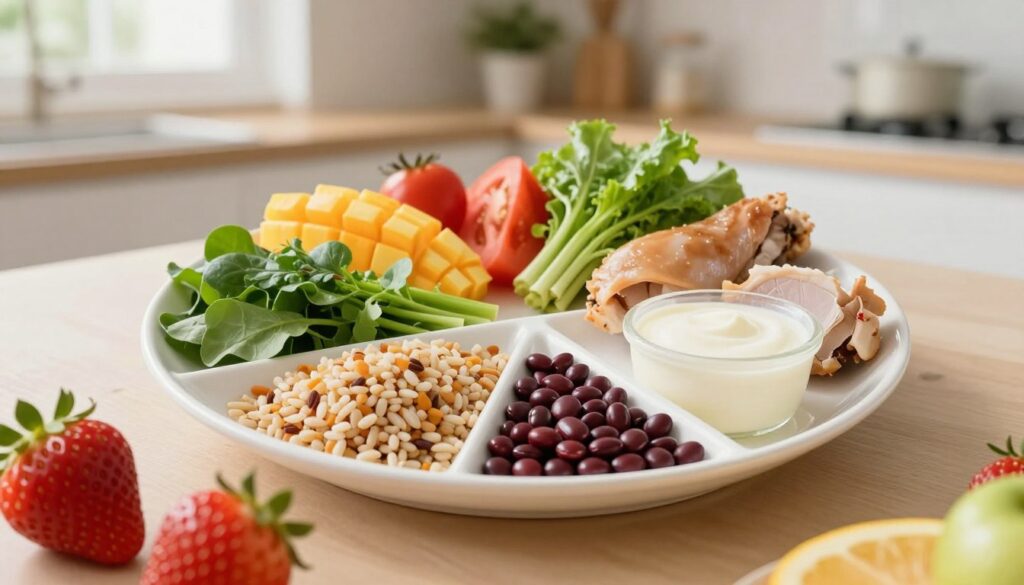
This balance delivers vitamins, minerals, and energy. A sample plate could have grilled chicken, quinoa, and a big salad.
Consistency matters. Try to eat three meals each day: breakfast, lunch, and dinner. Skipping meals can leave you short on key nutrients.
It also leads to energy crashes. A general schedule helps your body expect fuel at regular times.
Use this weekly checklist to cover your bases. Aim for variety to get a full mix of nutrients.
| Food Group | Daily Goal | Great Examples |
|---|---|---|
| Fruits & Vegetables | At least 5 servings | Berries, carrots, spinach, apples, bell peppers |
| Protein Foods | Include at every meal | Chicken, eggs, fish, beans, tofu, lean meat |
| Whole Grains | Make half your grains whole | Brown rice, whole-wheat bread, oatmeal |
| Dairy or Fortified Alternatives | 3 servings for bones | Milk, yogurt, cheese, fortified soy milk |
| Healthy Fats | A small serving daily | Avocados, nuts, seeds, olive oil |
This plan meets the high needs of adolescents. It supports growth and overall health.
Protein-rich foods build muscle. Calcium from dairy strengthens bones. Healthy fats are also important for your heart.
We’re realists. You’ll encounter fast food and treats. The goal is to enjoy them less often.
Limit processed foods with added sugars, unhealthy fats, and excess salt. These include candy, cookies, fries, and sodas.
They offer little nutrition and can impact weight and heart health. Making smarter swaps is a powerful skill.
| Instead Of… | Try This Smart Swap |
|---|---|
| Fried chicken | BBQ or roasted chicken |
| Hot chips or fries | Baked potato or sweet potato wedges |
| Large soda | Sparkling water with lemon or fruit |
| Packaged cookies | Homemade oatmeal raisin cookies |
| Sugary breakfast cereal | Whole-grain cereal with fresh berries |
These changes protect your health while keeping food enjoyable. You still have plenty of tasty options.
This flexible framework helps crowd out less nutritious choices. You’ll build a diet rich in the energy sources your growing body requires.
Your daily schedule is packed, but fueling your body shouldn’t be a hassle. Smart meal strategies fit right into your busy life. They provide steady energy for school, sports, and everything in between.
This approach makes healthy eating simple and sustainable. Let’s focus on quick, tasty options you can actually enjoy.
Never underestimate your morning meal. Skipping meals, especially breakfast, can leave you tired and unfocused all day.
A good morning meal supports memory and helps maintain a healthy weight. It’s also important for your brain power during first-period classes.
You don’t need an hour to cook. Try these fast foods:
These sources of protein and smart carbohydrates kickstart your metabolism. They keep you satisfied until lunch.
Packing your own lunch is a game-changer. It saves money and ensures you get the nutrients your body needs.
The goal is a balanced mix that powers you through afternoon activity. Aim for lean protein, complex carbs, and colorful vegetables.
Ditch the boring routine. Try these exciting options:
These meals provide lasting energy. They prevent that classic after-lunch slump during your last classes.
Snacks are not the enemy. Smart snacking keeps energy steady and curbs cravings for less healthy food.
Reach for foods that combine protein, healthy fats, and fiber. They keep you full and focused, whether studying or at practice.
Forget the vending machine chips. Stock these better choices:
Eating small, frequent meals helps when hitting the books. It provides a constant fuel supply for your brain.
For active teens with long days, an extra snack is key. A homemade trail mix with nuts and seeds offers great fuel.
By planning your breakfast, lunch, and snacks, you build a winning routine. You’ll support your overall health and avoid poor eating traps. This makes good nutrition a seamless part of your week.
Eating disorders represent a serious challenge many adolescents face, making awareness and support essential. This conversation is about mental and physical health. It goes beyond just food choices.
Building a positive self-image is a key part of your overall well-being. Roughly 30 million people in the U.S. may experience an eating disorder. These conditions are more common during the teenage years.
Your relationship with your body and eating habits needs care. Let’s explore how to understand the risks and foster a supportive environment at home.
Eating disorders are serious mental health conditions. They are not lifestyle choices. Anorexia nervosa, bulimia nervosa, and binge eating disorder involve extreme disturbances in behavior.
These disorders have dangerous physical and psychological consequences. Anorexia affects about 0.3% of teens. It involves severe restriction of food intake and an intense fear of gaining weight.
Bulimia impacts around 0.9% of adolescents. It features cycles of binge eating followed by purging. Binge eating disorder is more common, seen in about 1.6% of teens.
Sadly, statistics show over half of teenage girls and nearly one-third of teenage boys engage in unhealthy weight-control behaviors. This includes skipping meals or vomiting.
It’s vital to recognize these disorders can affect anyone. Race, ethnicity, or gender does not matter. They often stem from a mix of genetic, psychological, and social factors.
Early signs include obsession with food, diet, and body size. Withdrawal from social activity related to meals is another red flag. Physical effects can harm the heart, bones, and brain function.
Open, supportive communication at home is key for prevention. Avoid labeling foods as “good” or “bad.” This creates unnecessary guilt and fear around eating.
Instead, focus on how foods nourish and fuel your unique body. Discuss the nutrients in vegetables, protein sources, and healthy eating patterns. This supports your growth and activity level.
Discourage the idea that a certain body size equals happiness. Critically discuss images in media and on social platforms. Many are digitally altered and unrealistic.
Promote a balanced approach to all food groups. A healthy eating pattern includes carbohydrates for energy, protein for muscle, and fats for brain health. Vitamins and minerals from various sources are also important.
Here are some practical tips for positive conversations:
If you or a friend are struggling, know that early intervention is critical. Effective treatments exist. Family-Based Treatment (FBT) and Enhanced Cognitive Behavioral Therapy (CBT-E) can lead to recovery.
Our goal is a healthy relationship with food. All foods can fit. Your self-worth is completely separate from your appearance or weight. Good nutrition supports your needs without shame or fear.
By understanding these disorders and talking openly, you build resilience. You learn to appreciate your body for all it allows you to do each day.
Hydration, sleep, and movement are the silent partners in your health success. True wellness stretches far beyond what’s on your plate.
These powerful habits amplify every benefit of your healthy eating plan. They work together to fuel your growth, energy, and mood.
Think of them as the essential support crew for your body and brain. Let’s explore how to make them part of your routine.
Water is a superstar habit often overlooked. It is essential for every function in your body.
It regulates temperature, keeps skin clear, and maintains energy levels. Proper hydration is also important for your heart and brain function.
Ditch sugary sodas and sports drinks as your go-to. They add empty calories and can impact weight.
Experts recommend making water your main beverage. Limit sweet drinks to a maximum of three small servings per week.
Carry a reusable water bottle for easy access. Flavor it with fresh citrus, cucumber, or berries for a tasty twist.
Water is the driving force of all nature.
Making smart swaps is simple. This table shows better options for staying refreshed.
| Common Drink Choice | Why Limit It | Healthier Hydration Swap |
|---|---|---|
| Large Soda (20 oz) | High in added sugar, empty calories | Sparkling water with lime |
| Sweetened Iced Tea | Often contains as much sugar as soda | Unsweetened herbal tea, chilled |
| Energy Drink | Excess caffeine and sugar, can cause crashes | Cold water with a splash of 100% fruit juice |
| Flavored Coffee Beverage | Loaded with syrups and whipped cream | Black coffee or latte with a dash of cinnamon |
Sleep is non-negotiable for growth and recovery. Adolescents should aim for 8 to 10 hours each night.
This allows your body to repair muscles and consolidate memory. It also regulates hormones that control appetite and mood.
Managing stress is also important for your health. Chronic stress can hurt your eating habits.
Try mindfulness, hobbies, or talking to someone you trust. These activities protect your mental well-being.
Movement is medicine! Official guidelines recommend at least 60 minutes of physical activity daily.
This doesn’t mean grinding in the gym. Find activity you love, like dancing, skateboarding, or swimming.
Include muscle-strengthening moves at least three days a week. Think bodyweight exercises like push-ups or squats.
Add bone-strengthening activity, too. Jumping rope or playing basketball builds strong, resilient bones.
When you combine these habits with nutritious food, you build a holistic foundation. This supports your fitness goals, academic success, and long-term health.
Your body and brain thrive on this complete mix of care. It’s the ultimate plan for total teen wellness.
Building lasting health is a marathon, not a sprint. Your teen years set the pace. Remember, progress matters more than perfection.
Adolescence is a unique window to build a solid nutrition foundation. This supports rapid growth, fuels fitness goals, and sharpens your brain. You now understand essential nutrients like protein, vitamins, and minerals.
Tools like MyPlate help create balanced meals. Smart strategies for breakfast, lunch, and snacks fit a busy life. We’ve also covered body image and eating disorders.
Habits you form now are investments in long-term health. Start with one small change. Add a vegetable to your lunch or swap soda for sparkling water.
Each positive choice builds momentum. You have the power to fuel your body in a way that makes you feel energized and confident. By nourishing with intention, you build a foundation for a vibrant life.