Physical Address
304 North Cardinal St.
Dorchester Center, MA 02124
Physical Address
304 North Cardinal St.
Dorchester Center, MA 02124


What if the secret to reclaiming your energy and physique isn’t about drastic restriction, but a smarter nutritional approach? If you’ve noticed stubborn weight, slower recovery, or afternoon energy crashes, you’re not alone.
Crossing the 40-year mark brings real shifts in hormone balance and metabolic efficiency. Your body’s needs change, demanding a new strategy for sustenance.
This guide offers a practical, science-backed roadmap. We focus on sustainable habits, not quick fixes. You’ll learn how to calculate your unique calorie needs and build balanced plates.
We’ll explore specific foods that support a robust metabolic rate. Integrating the right exercise will also be covered. The long-term payoff is substantial: improved vitality, preserved muscle, and better overall health.
Tools like NutriScan can simplify tracking for consistency. This is more than a short-term fix. It’s a lifestyle adjustment designed for the physiological changes you experience.
Let’s create a personalized strategy. You can feel stronger and more energetic by investing in your nutrition now.
The biological rules of the game change after age 40, demanding a fresh playbook for nutrition and fitness. Ignoring these shifts can lead to frustration with your physique and energy. Understanding them is your first step toward taking control.
This knowledge forms your metabolic baseline. It’s the foundation for building a strategy that works with your body, not against it.
Several key physiological changes begin to accelerate in your forties. Your metabolic rate slows by roughly 5% every decade after age 30.
Testosterone levels also start a gradual decline, dropping about 1-2% each year after 40. This hormone is crucial for maintaining lean tissue and vitality.
These shifts directly impact your daily life. You might notice lower energy levels and a body composition that favors storing fat over building muscle. Your body becomes less efficient at processing nutrients from food.
The table below summarizes these core changes:
| Change | Rate/Impact | Primary Effect |
|---|---|---|
| Metabolic Rate | Slows ~5% per decade after 30 | Fewer calories burned at rest |
| Testosterone Levels | Declines 1-2% annually after 40 | Reduced muscle mass, lower energy |
| Muscle Mass (Sarcopenia) | Gradual loss of strength and tissue | Lower metabolic rate, weight gain risk |
Sarcopenia is the age-related loss of muscle mass and strength. It’s a primary reason many guys struggle with weight management later in life.
Muscle is metabolically active tissue. It burns calories even when you’re at rest. As you lose it, your resting metabolic rate drops.
This creates a challenging cycle. Less muscle makes it easier to gain body weight, particularly as fat. Excess fat mass can further impact hormone balance and overall health.
Preserving lean tissue is therefore critical. It supports a healthier metabolism and protects against long-term health risks.
The good news is that decline is not inevitable. Targeted dietary choices can powerfully counteract these effects.
Food can support or hinder hormone optimization. Certain nutrients aid testosterone production and muscle protein synthesis.
Research from Harvard provides compelling evidence for acting now. It shows that people who follow healthy eating patterns from their 40s onward are 43-84% more likely to be well-functioning physically and mentally at age 70.
Think of your nutrition as a long-term investment. The benefits compound over time, leading to a dramatically better quality of life in your later decades.
This hopeful perspective is key. By understanding these changes, you can build a nutritional approach that delivers sustained results.
A precise calorie baseline acts like a financial budget for your body. It guides your nutritional decisions with clarity.
This step moves you away from guesswork. You create a solid foundation for managing your weight effectively.
Establishing an accurate number is crucial. It supports metabolic health and prevents common frustrations.
Your daily needs depend heavily on your movement patterns. An honest assessment of your activity level is key.
Guys in their forties typically require between 2,200 to 2,800 calories each day. The exact figure varies based on how active you are.
Use the table below as a starting guide. It breaks down the ranges for three common lifestyles.
| Activity Level | Description | Daily Calorie Range |
|---|---|---|
| Sedentary | Mostly desk-based work, minimal structured exercise. | 2,000 – 2,200 |
| Moderately Active | Regular daily movement plus exercise 3-4 times weekly. | 2,200 – 2,600 |
| Highly Active | Physically demanding job or daily intense training. | 2,400 – 2,800 |
Remember, these are estimates. Your personal intake should support your energy and muscle mass.
Drastic calorie reduction is a common mistake. It often backfires for long-term weight loss.
Severe restriction signals your body to conserve energy. It may hold onto fat and burn precious muscle tissue instead.
This worsens your metabolic rate over time. The goal is not just to eat less food.
You must consume enough quality nutrients. This supports lean tissue and sustained vitality.
Think of it as fueling a high-performance engine. The right amount of premium fuel keeps it running smoothly.
Technology simplifies this process immensely. Apps and calculators provide personalized numbers in minutes.
Tools like macro calculators or NutriScan use your data. You input height, current weight, age, and activity patterns.
The app then generates tailored calorie and macronutrient targets. This removes the hassle of manual math.
Here are a few practical tips for success. First, be brutally honest about your daily movement when inputting data.
Second, plan to recalibrate your needs every few years. Your metabolism continues to change as you age.
View this step as setting a solid foundation. It is not a restrictive short-term diet.
This positive mindset is powerful. With your calorie baseline set, you’re ready to build your plate intelligently.
The next section details how to distribute those calories. We’ll focus on protein, carbs, and fats for optimal results.
Your body’s demand for this essential macronutrient actually increases as you get older, not decreases. This is a crucial pivot in your nutritional strategy.
Protein serves a dual purpose. It’s the primary building block for preserving and building lean tissue. It also has a high thermic effect, meaning your body burns more calories processing it.
This makes it a powerful ally against age-related muscle loss. Consuming enough supports a robust metabolism and overall health.
Research provides clear guidance to combat sarcopenia. Aim for 0.7 to 1 gram of protein per pound of your body weight each day.
For a guy weighing 180 pounds, this translates to 126 to 180 grams daily. The exact amount depends on your activity level and goals.
This intake supports muscle protein synthesis. It’s the process your body uses to repair and grow tissue.
Use this table to find your personal target range quickly. It’s based on the 0.7-1g per pound guideline.
| Body Weight (lbs) | Minimum Daily Protein (0.7g/lb) | Optimal Daily Protein (1g/lb) |
|---|---|---|
| 160 | 112 grams | 160 grams |
| 180 | 126 grams | 180 grams |
| 200 | 140 grams | 200 grams |
| 220 | 154 grams | 220 grams |
Pairing this intake with regular strength training maximizes results. The synergy is undeniable for maintaining strength.
You have excellent options from both animal and plant kingdoms. The key is choosing high-quality foods.
Animal sources like chicken breast, fish, eggs, and lean beef are complete proteins. They contain all nine essential amino acids your body needs.
Plant-based sources are fantastic too. Lentils, chickpeas, tofu, tempeh, and edamame are packed with protein.
Some plant proteins are incomplete, but this is easily solved. Combining foods like rice and beans or whole grains with nuts creates a complete amino acid profile.
Tofu and tempeh are particularly versatile complete options. Don’t let concerns about plant-based diets hold you back.
Your body can only use so much protein at once for muscle synthesis. Loading up at dinner misses key opportunities.
Instead, aim for 30 to 40 grams per meal. Spread this across three meals and a snack or two.
This approach keeps muscle-building signals active all day. It turns off the fat-storing mode more effectively.
Start your morning with eggs or Greek yogurt. Include chicken or fish at lunch. Have a protein-rich snack in the afternoon.
Meeting your target becomes effortless with a little planning. This consistent fueling strategy sets a strong foundation.
Now, let’s look at how to build those meals with the right balance of other nutrients.
Forget complex calorie counting; the simplest way to build a nourishing meal is right in front of you—your plate. Visual guides cut through the noise and provide instant clarity.
This section introduces a powerful framework for portion control. It ensures every meal supports your body and energy needs without complicated math.
The “Perfect Plate” is a visual tool for balanced nutrition. It divides your dinner plate into clear, manageable sections.
This method automatically controls portions and calorie intake. It prioritizes nutrient-dense food for optimal health.
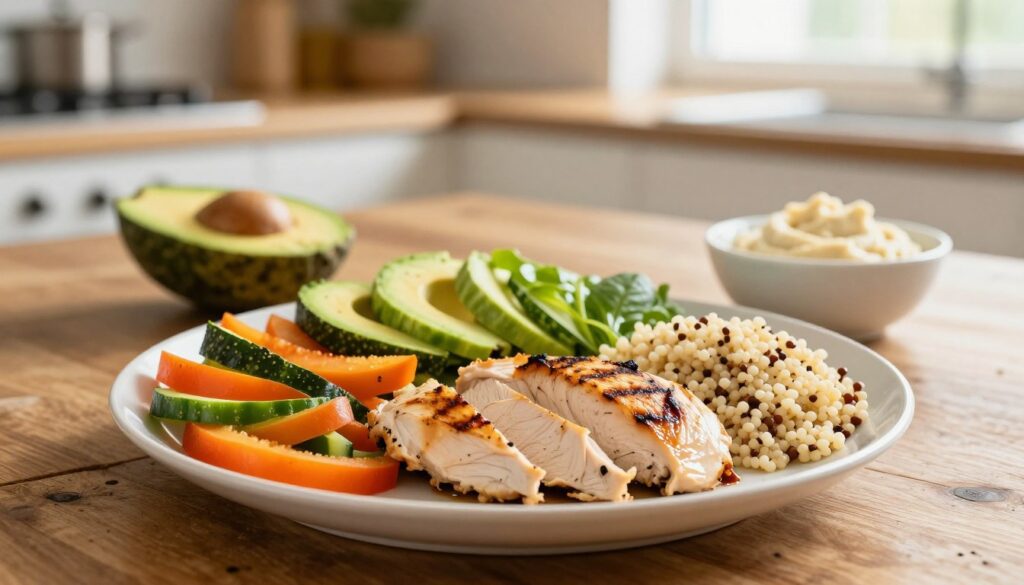
| Plate Section | Portion Size | Food Examples | Primary Benefit |
|---|---|---|---|
| Non-Starchy Vegetables | ½ of the plate | Broccoli, spinach, peppers, carrots, green beans | High volume, fiber, and micronutrients with few calories |
| Lean Protein | ¼ of the plate | Chicken breast, fish, tofu, lentils, eggs | Supports muscle maintenance and promotes satiety |
| Complex Carbohydrates | ¼ of the plate | Quinoa, brown rice, sweet potato, whole-grain pasta | Provides sustained energy and additional fiber |
| Healthy Fats | A small side portion | ¼ avocado, a handful of nuts, a drizzle of olive oil | Supports hormone function and nutrient absorption |
This approach manages weight naturally. It fills you up with the right foods.
Not all carbs are created equal. The quality of your carbohydrate sources makes a major difference.
Focus on complex, fiber-rich options. Whole grains, legumes, and fruits provide steady fuel.
These foods prevent sharp spikes and crashes in blood sugar. They keep your energy levels stable for hours.
Simple carbs like white bread or sugary snacks offer a quick burst. They often lead to fatigue and increased hunger soon after.
Time your carbohydrate intake around physical activity. Consuming them before or after exercise helps your body use them for fuel.
This strategic timing supports performance and recovery. It aligns your nutrition with your lifestyle.
Dietary fats are essential, not optional. They play a critical role in hormone production and brain health.
Including the right fats supports testosterone balance. It also aids in the absorption of fat-soluble vitamins.
Excellent sources include avocados, nuts, seeds, and olive oil. Fatty fish like salmon provide omega-3s, which are crucial for heart health.
Aim to include a source of these fats in your meals daily. A small amount goes a long way.
Limit saturated fats to less than 10% of total calories. This supports long-term cardiovascular health.
Implementing this balanced plate is straightforward. Use it as a template during weekly meal prep.
When dining out, visualize the plate sections before you order. This simple habit promotes consistency.
This framework provides all essential nutrients. It works in harmony with your metabolic changes.
Now, let’s explore specific, powerful foods that fit perfectly into each section of your plate.
Think of your kitchen as a metabolic toolkit, stocked with powerful ingredients that naturally enhance your body’s calorie-burning engine. Consistently including specific foods can create a powerful synergistic effect.
This approach goes beyond basic nutrition. It leverages science to support your body and energy levels.
Let’s explore the top performers. We’ll break down why they work and how to add them to your day.
These protein sources are foundational. They have a high thermic effect, meaning your system uses more energy to digest them.
This process directly increases calorie burn. It also provides essential amino acids crucial for maintaining lean muscle mass.
Fish like salmon and tuna offer a double benefit. They are rich in omega-3 fatty acids, which support heart health and may enhance metabolic function.
Lean poultry, such as chicken and turkey breast, is incredibly versatile. It fits perfectly into lunches and dinners.
Practical tips make inclusion easy. Grill a few chicken breasts for quick meal prep.
Add flaked salmon to a salad for a satisfying lunch. These simple actions yield significant results over time.
Fiber is a secret weapon for managing weight. It promotes fullness and helps stabilize blood sugar.
This prevents energy crashes and curbs unnecessary snacking. Your intake of these foods matters.
Beans and lentils are stellar choices. They provide both protein and fiber, making them incredibly satiating.
A bowl of oatmeal in the morning offers sustained fuel. It keeps you satisfied for hours.
Try adding lentils to soups or stews for a hearty texture. Use black beans in tacos or salads.
Starting your day with oatmeal topped with fruits is a smart habit. These vegetables and grains are easy to incorporate.
Don’t fear dietary fat. The right kinds are vital for hormone production and reducing inflammation.
Almonds and walnuts provide healthy fats and a bit of protein. A small handful makes a perfect snack.
Berries like blueberries and strawberries are antioxidant powerhouses. They combat cellular stress and are high in fiber.
Broccoli and other cruciferous vegetables are packed with nutrients and water. They add volume to meals with minimal calories.
For a quick metabolism nudge, consider chili peppers. The compound capsaicin can temporarily increase calorie expenditure.
Steam broccoli as a simple side dish. Sprinkle berries on yogurt or enjoy them fresh.
A dash of hot sauce can add flavor and a metabolic kick. These foods work together for better health.
Hydration is a critical companion to this eating plan. Drinking water can slightly increase metabolic rate and help manage appetite.
Aim for about half your body weight in ounces each day. For example, a 180-pound man should target 90 ounces.
Green tea is another excellent beverage. It contains compounds that may support fat loss.
Regularly consuming these items creates a cumulative benefit. No single food is a magic bullet.
The combination supports your workout efforts and daily vitality. In the next section, you’ll see how these foods come together in a sample day of meals.
This practical meal plan will make applying these principles straightforward and effective.
Beyond food choices, the timing of your meals plays a pivotal role in how you feel and perform each day. Eating strategically supports steady energy levels, optimizes hormone function, and enhances metabolic health.
This isn’t about rigid schedules. It’s about syncing your nutrition with your body’s natural rhythms.
Proper meal timing can amplify your workout efforts and improve body composition. Let’s explore how to make the clock work for you.
Many guys think skipping the first meal saves calories. This approach often backfires for men aiming to maintain muscle and vitality.
Morning fasting can disrupt testosterone production. It also slows muscle protein synthesis, which is vital for preserving lean tissue.
Consuming 25 to 30 grams of protein within two hours of waking is highly beneficial. This practice kickstarts your metabolism and provides sustained fuel.
Here are some excellent breakfast options that hit this target:
Starting your day this way sets a positive tone. It helps control appetite and prevents energy crashes later on.

What you eat around your training sessions is crucial. The right fuel boosts performance and speeds up recovery.
Pre-workout focus should be on easily digestible carbohydrates. They provide immediate energy for your exercise without causing discomfort.
A small banana, a slice of toast with jam, or a bowl of oatmeal an hour before you train works well. This prevents early fatigue and helps you lift heavier or run longer.
Post-workout is the golden window for repair. Combining protein and carbs here replenishes glycogen stores and repairs muscle fibers.
Aim for a ratio like 20-30 grams of protein with 30-40 grams of carbs. This could be a chicken breast with sweet potato or a recovery shake.
“The synergy between post-exercise nutrition and muscle repair is well-documented. Consuming protein and carbohydrates soon after training maximizes adaptation.”
If you practice intermittent fasting, adjust your eating window. Ensure you still get adequate protein distribution around your activity.
Your body’s circadian rhythm influences how it processes food at night. Eating most of your calories earlier aligns with natural energy cycles.
A large, heavy meal right before bed can disrupt sleep and hinder metabolic function. It may also promote unwanted fat gain.
Opt for a lighter dinner that’s still balanced. Include lean protein, non-starchy vegetables, and a modest portion of complex carbs.
Finish eating at least two to three hours before you go to sleep. This gives your body time to begin digestion.
If you feel hungry later, choose a small, protein-rich snack. A few examples include:
These tips support better sleep quality and a more efficient metabolism overnight. They help you wake up feeling refreshed and ready for your morning meal.
For busy men, preparation is key. Consider making overnight oats or pre-blending a post-workout shake the night before.
Proper timing enhances every other aspect of your diet. It turns good food choices into great results.
Now, let’s see these principles in action. The following sample meals plan incorporates smart timing for a full day of eating.
A sample day of eating brings all the concepts together into actionable meals and snacks. This practical blueprint shows how to structure your nutrition from morning to evening.
It’s designed for a moderately active guy needing around 2,600 calories. You can adjust portions up or down based on your personal intake targets.
Every meal and snack has a specific purpose. They support muscle maintenance, stable energy, and metabolic efficiency.
This schedule incorporates smart timing and powerful food choices. Each item supports the goals discussed in earlier sections.
| Meal | Food Items & Portion | Calories | Key Macronutrients | Rationale & Prep Notes |
|---|---|---|---|---|
| Breakfast | 1 cup cooked oatmeal, ½ cup mixed berries, 1 oz almonds | 520 | Carbs: 65g, Protein: 18g, Fat: 22g | Provides complex carbs and fiber for sustained morning energy. The berries offer antioxidants. Prepare oatmeal overnight for a quick grab-and-go option. |
| Morning Snack | 1 cup plain Greek yogurt, ½ oz walnuts | 280 | Carbs: 10g, Protein: 24g, Fat: 14g | A high-protein snack to curb hunger and support muscle protein synthesis between meals. The walnuts add healthy fats. |
| Lunch | 6 oz grilled chicken breast, 1 cup cooked brown rice, large mixed salad (2 cups greens, veggies, vinaigrette) | 650 | Carbs: 55g, Protein: 50g, Fat: 25g | Aligns with the “Perfect Plate” method. Lean protein and complex carbs refuel the body. Prep chicken and rice in bulk for the week. |
| Pre-Workout Snack | 1 medium apple, 2 tbsp natural peanut butter | 240 | Carbs: 30g, Protein: 8g, Fat: 16g | Offers easily digestible carbs for exercise fuel about 60 minutes before training. The fat and protein provide staying power. |
| Dinner | 7 oz baked salmon, 1 medium baked sweet potato, 2 cups steamed broccoli | 680 | Carbs: 45g, Protein: 45g, Fat: 35g | Salmon provides omega-3s for heart health and inflammation control. Sweet potato offers fiber and vitamins. A balanced, recovery-focused evening meal. |
| Evening Option | Casein protein shake (1 scoop mixed with water) | 230 | Carbs: 4g, Protein: 24g, Fat: 2g | Slow-digesting casein protein supports muscle repair overnight. This can help manage late-night hunger without a heavy meal. |
This sample day delivers approximately 165 grams of protein. It hits the target for preserving lean mass.
The fiber from oats, fruits, vegetables, and brown rice aids digestion and satiety. Healthy fats are present in nuts, salmon, and olive oil.
“Consistency in meal composition and timing is a stronger predictor of long-term body composition success than perfection on any single day.”
Using an app like NutriScan can simplify tracking this plan. It can auto-adjust portions if your calorie needs change.
Spending a few hours on the weekend sets you up for success all week. It eliminates daily decision fatigue and prevents poor choices.
Batch cooking is the cornerstone of an efficient lifestyle. This table outlines a simple workflow.
| Prep Task | Details & Examples | Time Estimate |
|---|---|---|
| Cook Proteins | Grill or bake 4-6 chicken breasts, 1 lb of ground turkey, and a large piece of fish like salmon. Hard-boil a dozen eggs. | 60-75 minutes |
| Prepare Grains | Cook 3-4 cups of quinoa or brown rice. Store in airtight containers for easy reheating. | 30-40 minutes |
| Chop Vegetables | Wash and cut broccoli, bell peppers, carrots, and leafy greens. Store in clear containers for salads and cooking. | 20-30 minutes |
| Pre-Portion Snacks | Divide nuts, yogurt, or cut fruits into single-serving containers or bags. | 15 minutes |
Dedicate a 2 to 3-hour block on Sunday afternoon. Put on some music or a podcast to make it enjoyable.
Create a standardized shopping list based on your weekly menu. This saves time at the store and reduces waste.
Consider making freezer-friendly meals like chili or soup in large batches. They provide a quick backup on busy nights.
Your diet needs to work in the real world. Social flexibility prevents feelings of deprivation and supports long-term results.
When reviewing a restaurant menu, look for these simple modifications.
At parties or holidays, strategy is key. Eat a small, protein-rich snack before you go to avoid arriving overly hungry.
Once there, fill your plate once with lean proteins and veggies. Enjoy a sensible portion of treats mindfully, then focus on socializing.
Remember, one off-plan meal doesn’t undo progress. It’s your average weekly intake that matters most for weight management.
This entire framework is highly adaptable. Whether your goal is maintenance, fat loss, or fueling high activity, you can scale portions accordingly.
The same principles can be modified for various dietary preferences, including plant-based eating. Let’s explore how to adapt this plan if you prefer vegan or vegetarian options.
Whether you’re fully vegan or just exploring meatless meals, your nutritional needs after 40 remain a top priority. A well-structured plant-based diet can absolutely support muscle maintenance and metabolic health. This section provides a clear roadmap for making it work.
The key is strategic planning. You’ll learn how to meet your protein targets and secure essential nutrients.
This approach offers fantastic flexibility. It can be tailored to your personal preferences and lifestyle.
Meeting your daily protein goal is straightforward with the right plant foods. Many options are rich in fiber and other vital nutrients.
The table below highlights some of the most potent sources. It includes their approximate protein content per common serving.
| Food Source | Serving Size | Protein Content | Notes |
|---|---|---|---|
| Lentils | 1 cup (cooked) | 18 grams | Also high in iron and fiber. |
| Tofu (firm) | 4 oz | 20 grams | A complete protein, versatile for cooking. |
| Tempeh | 3 oz | 16 grams | Fermented, often easier to digest. |
| Hemp Seeds | 3 tablespoons | 10 grams | Contains healthy fats and all essential amino acids. |
| Quinoa | 1 cup (cooked) | 8 grams | A complete protein grain. |
| Black Beans | 1 cup (cooked) | 15 grams | Excellent source of fiber and protein. |
To ensure a complete amino acid profile, combine complementary proteins. Classic pairings include rice and beans or hummus with whole-grain pita.
This practice maximizes your body‘s ability to use the protein for repair and growth. It’s simpler than it sounds.
Here’s a sample day of eating for a moderately active man. It provides roughly 2,600 calories and over 130 grams of protein.
This plan swaps animal products from the earlier sample while maintaining balance.
Weekly meal prep is your best friend. Cook batches of lentils, quinoa, and roasted vegetables.
Portion them into containers for grab-and-go meals. This saves time and ensures you always have a healthy option ready.
Certain nutrients require extra attention on a plant-based diet. A proactive approach prevents deficiencies.
Zinc is crucial for immune function and testosterone production. Excellent sources include pumpkin seeds, cashews, and lentils.
Vitamin D supports bone health and mood. Get sunlight exposure and consider fortified plant milks or a supplement.
Vitamin B12 is non-negotiable. It is not found in reliable amounts in plant foods.
A daily supplement or consumption of fortified foods like nutritional yeast is essential. This supports nerve function and energy levels.
“Plant-based diets rich in zinc from seeds and nuts, combined with healthy fats from avocados, can support healthy testosterone levels, which is a key concern for men over 40.”
Including a variety of fruits and vegetables provides antioxidants. These combat inflammation and support overall health.
Regularly review your intake or consult a nutrition professional. This ensures your diet is working for your body.
Remember, flexibility is powerful. Some men thrive on a fully vegan plan.
Others may include occasional eggs or fish. The goal is to find a sustainable pattern that supports your muscle mass and energy.
With careful planning, a plant-powered approach is not only viable but highly effective. It aligns perfectly with the core principles of this guide.
Optimal nutrition provides the fuel, but your daily movement and recovery habits are the engine that drives lasting metabolic change. What you do outside the kitchen powerfully amplifies your dietary efforts.
This synergy is non-negotiable for achieving your goals. A great eating plan alone cannot fully counteract a sedentary lifestyle or poor recovery.
Integrating smart exercise with key lifestyle factors creates a compounding effect. It accelerates results and improves overall health.
Building lean muscle mass is one of the most effective levers you can pull. Muscle tissue is metabolically active, burning calories even at rest.
For men experiencing age-related changes, this is crucial. Strength training directly combats sarcopenia, the loss of muscle.
More muscle means a higher resting metabolic rate. This makes managing your weight easier over the long term.
Aim for at least two resistance workouts per week. Focus on compound movements like squats, presses, and rows.
These exercises engage multiple muscle groups efficiently. They also support healthy hormone levels.
Cardiovascular activity and High-Intensity Interval Training (HIIT) serve a different purpose. They burn calories and improve heart health.
This creates a larger energy deficit, supporting fat loss. It also boosts endurance for daily activity.
NEAT, or Non-Exercise Activity Thermogenesis, is your secret weapon. It includes all the movement you do outside the gym.
Walking, taking stairs, and even gardening add up. Increasing your NEAT can significantly raise your daily calorie expenditure.
Simple strategies make a big difference. Park farther away, take walking meetings, or stand while working.
This consistent, low-level exercise supports your metabolism all day long.
Your recovery habits are just as important as your workouts. Poor sleep disrupts the hormones that control hunger and satiety.
This can lead to increased cravings and weight gain. Aim for 7-8 hours of quality sleep each night.
Chronic stress elevates cortisol, a hormone linked to abdominal fat storage. Managing stress is not optional for metabolic health.
“Elevated cortisol from ongoing stress can directly promote the storage of visceral fat, undermining even the best nutritional efforts.”
Techniques like meditation, deep breathing, or yoga can help. Find what lowers your stress levels and practice it regularly.
Hydration is fundamental for every metabolic process. Even mild dehydration can slow your metabolism.
A simple formula is to aim for half your body weight in ounces of water daily. For a 180-pound man, that’s 90 ounces.
Carry a water bottle and sip consistently. Herbal tea and sparkling water are great alternatives.
When you integrate these elements, the synergy is powerful. Your nutrition fuels quality exercise, and proper recovery lets you perform better.
Schedule your workouts like important meetings. Prioritize sleep and manage stress proactively.
This holistic approach ensures your hard work in the kitchen and gym pays off. Even with this powerful synergy, avoiding common mistakes is key to lasting success.
Identifying these errors is the first step toward correcting them. A focused audit of your current habits can reveal surprising gaps. Let’s explore three frequent mistakes that sabotage weight loss and metabolic health.
Addressing them will help you protect your results and maintain momentum. This is about fine-tuning your approach for the long haul.
Your body and metabolism are not the same as they were a decade ago. Metabolic rate slows roughly 5-10% per decade after age 30.
Eating the same portions and food choices from your thirties ignores this fundamental shift. It leads to a gradual, frustrating weight gain over time.
The solution is not to eat drastically less. You must recalibrate your calories and nutrition to match your current needs.
Use a calculator to find your new baseline. Then, adjust your meals accordingly. This simple step aligns your intake with your activity level and lifestyle.
Skipping breakfast is a common part of this outdated pattern. It can disrupt hormone levels and lead to overeating later.
Liquid calories are a major hidden culprit. Beverages like craft beer, sweetened coffee drinks, soda, and sports drinks add hundreds of extra calories daily.
These drinks don’t trigger the same fullness signals as solid food. You can consume a large amount without feeling satisfied.
This table shows how quickly these choices add up:
| Beverage | Typical Serving | Approximate Calories | Weekly Impact (If Daily) |
|---|---|---|---|
| Vanilla Latte | 16 oz (Grande) | 250 | 1,750 calories |
| Craft IPA Beer | 1 pint (16 oz) | 200 | 1,400 calories |
| Sweetened Iced Tea | 20 oz bottle | 180 | 1,260 calories |
| Regular Soda | 12 oz can | 150 | 1,050 calories |
Consuming an extra 300-500 liquid calories each day can lead to a pound of fat gain per month. This directly hinders weight loss efforts.
Swap these for water, sparkling water, black coffee, or unsweetened tea. Flavor water with citrus or herbs. This one change can create a significant calorie deficit.
Focusing only on protein, carbs, and fats is a common error. Men over 40 need adequate vitamins and minerals for optimal function.
Key micronutrients like zinc, vitamin D, and magnesium are crucial. They support testosterone production, energy levels, and muscle function.
Relying on processed “diet” or “low-fat” foods often backfires. These products are frequently loaded with added sugars and lack nutritional value.
“A deficiency in zinc or vitamin D can significantly impact metabolic rate and hormonal balance, making weight management feel like an uphill battle.”
Another sub-mistake is concentrating your dietary protein at one meal. Your body uses it best when spread throughout the day.
Also, don’t forget fiber from vegetables and fruits. It aids digestion and promotes satiety, helping control calories naturally.
The fix is to prioritize whole, nutrient-dense foods. Include lean meats, leafy greens, nuts, seeds, and fatty fish.
Consider a quality multivitamin if your diet is inconsistent. But whole foods should always be your primary source.
Take a moment to audit your current habits. Which of these pitfalls might be affecting your results?
Making targeted adjustments can unlock new progress. It ensures the effort you put into your nutrition pays full dividends.
Avoiding these errors will help you maintain the gains achieved through your lifestyle changes. It solidifies your path forward toward lasting health.
You now possess a clear, actionable blueprint for revitalizing your well-being in your forties and beyond. This strategy is built on understanding your calorie needs, prioritizing protein, and building balanced meals.
Combining this nutrition with regular exercise and good recovery habits yields the best results. Start with one simple step, like adjusting your protein intake or prepping tomorrow’s lunch.
Focus on consistency, not perfection. Small, smart changes compound into major improvements for your health and energy. Take that first step today.