Physical Address
304 North Cardinal St.
Dorchester Center, MA 02124
Physical Address
304 North Cardinal St.
Dorchester Center, MA 02124


What if I told you the world’s most praised eating pattern doesn’t involve strict rules or calorie counting? This approach to nutrition focuses on abundance rather than restriction.
Backed by decades of research, this way of eating emerged from studies linking it to remarkable heart health. Scientists noticed people in certain regions lived longer, healthier lives.
The core philosophy celebrates plant-based foods, healthy fats, and whole grains. It’s not just a diet—it’s a sustainable lifestyle with proven benefits for body and mind.
This eating pattern supports everything from cardiovascular function to brain health. Its flexibility makes it adaptable across cultures while delivering consistent results.
Imagine an eating approach that feels more like celebrating food than restricting it. This nutritional pattern focuses on abundance rather than limitation, making it both enjoyable and sustainable.
I discovered this way of eating isn’t about counting calories or following strict rules. It’s about embracing whole, delicious foods that nourish your body and soul.
This nutritional philosophy extends beyond what’s on your plate. It incorporates social connections, physical activity, and enjoying meals with others.
The cultural aspect makes this approach special. People in Mediterranean regions traditionally share meals with family and friends. This social connection enhances both mental and physical well-being.
Fresh, seasonal ingredients form the foundation. I appreciate how this emphasizes local produce at its peak flavor and nutrition.
Plant-based foods take center stage in this eating pattern. Abundant vegetables, fruits, legumes, and whole grains provide essential vitamins and fiber.
Healthy fats play a crucial role, particularly extra virgin olive oil. This oil contains antioxidants that fight inflammation and support heart health.
Protein sources include fish rich in omega-3s, poultry, and moderate dairy. Red meat appears rarely, usually as a small side rather than the main focus.
Nuts and seeds add crunch and nutrition. They provide healthy fats, protein, and important minerals.
| Food Category | Recommended Frequency | Key Benefits |
|---|---|---|
| Vegetables & Fruits | Daily abundance | Vitamins, fiber, antioxidants |
| Extra Virgin Olive Oil | Primary fat source | Heart health, anti-inflammatory |
| Fish & Seafood | 2-3 times weekly | Omega-3 fatty acids |
| Whole Grains | Daily consumption | Fiber, sustained energy |
| Legumes & Nuts | Regular inclusion | Plant protein, healthy fats |
This approach avoids rigid calorie counting or portion measuring. Instead, it encourages listening to your body’s hunger signals.
The flexibility makes it adaptable across different cultures and preferences. You can incorporate local ingredients while maintaining the core principles.
Research shows impressive results from this balanced approach. The PREDIMED study demonstrated a 30% reduction in cardiovascular disease risk compared to low-fat diets.
This eating pattern supports sustainable weight management without deprivation. It focuses on nourishment rather than restriction.
The combination of whole foods creates synergistic health benefits. Nutrients work together to support overall wellness and disease prevention.
I’ve witnessed firsthand how this eating pattern transforms lives through its powerful health benefits. The evidence supporting its effectiveness continues to grow with each new study.
Research shows this approach delivers comprehensive wellness advantages. It addresses multiple body systems simultaneously through synergistic nutrition.
The PREDIMED study demonstrated a 30% reduction in cardiovascular disease risk. This impressive result comes from combining healthy fats, fiber, and antioxidants.
These components work together to improve cholesterol levels and blood pressure. They also reduce inflammation throughout the circulatory system.
Regular consumption of extra virgin olive oil plays a crucial role. Its monounsaturated fats support arterial health and prevent plaque buildup.
This eating pattern significantly protects brain function as we age. The anti-inflammatory omega-3s from fish and polyphenols from plants are key players.
Studies show reduced dementia risk among those following this approach. Cognitive decline slows considerably when people maintain this nutritional pattern.
The brain benefits from improved blood flow and reduced oxidative stress. These factors combine to preserve memory and mental sharpness.
Cancer prevention represents another major advantage of this eating style. High antioxidant and fiber intake particularly reduces colorectal and breast cancer risks.
Inflammation reduction forms the foundation of these protective effects. Extra virgin olive oil contains oleocanthal and hydroxytyrosol with potent anti-inflammatory properties.
These compounds work like natural ibuprofen without side effects. They combat chronic inflammation that contributes to cancer development.
Sustainable weight loss occurs naturally with this approach. Satiating foods like vegetables, legumes, and healthy fats prevent overeating.
People experience 20% lower risk of premature death over decades. This eating pattern supports longevity through multiple mechanisms.
Gut health improves through prebiotic fibers that feed beneficial bacteria. Better microbiota balance reduces systemic inflammation and supports overall health.
Mental wellness benefits include reduced depression and anxiety rates. The gut-brain axis functions optimally when nourished with these whole foods.
Building a nourishing plate starts with understanding the essential building blocks. I find this approach focuses on whole, nutrient-rich foods that work together for optimal wellness.
Plants form the cornerstone of this eating pattern. I recommend at least three servings each of vegetables and fruits daily.
These provide essential vitamins, minerals, and fiber. They help reduce inflammation and support digestive health.
Legumes like beans and lentils offer plant-based protein. Aim for three servings weekly to boost fiber intake.
Extra virgin olive oil serves as the primary fat source. Its anti-inflammatory properties make it invaluable for heart health.
Use 1-4 tablespoons daily for cooking and dressings. This oil contains antioxidants that combat oxidative stress.
Nuts provide additional healthy fats and crunch. Walnuts and almonds are excellent choices for three weekly servings.
Fish rich in omega-3s supports brain function and reduces inflammation. Enjoy salmon or sardines three times weekly.
Poultry offers lean protein when consumed in moderation. Choose skinless cuts and limit to one serving daily.
Dairy should be natural and moderate. Greek yogurt and cheese provide calcium without excessive saturated fat.
Whole grains deliver sustained energy and important fiber. Oats, barley, and quinoa are excellent choices for daily meals.
Processed foods and added sugars are minimized. This reduces inflammation and supports stable blood sugar levels.
The combination creates balanced nutrition that satisfies hunger. It promotes weight management without deprivation.
| Food Group | Recommended Servings | Key Nutrients | Health Impact |
|---|---|---|---|
| Vegetables | 3+ daily | Fiber, vitamins | Reduces disease risk |
| Fruits | 3+ daily | Antioxidants | Fights inflammation |
| Extra Virgin Olive Oil | 1-4 tbsp daily | Monounsaturated fats | Heart protection |
| Fish | 3 weekly | Omega-3 fatty acids | Brain function support |
| Legumes | 3 weekly | Plant protein | Blood sugar control |
| Nuts | 3 weekly | Healthy fats | Cholesterol management |
| Whole Grains | 3-6 daily | Complex carbohydrates | Sustained energy |
This balanced approach ensures comprehensive nutrition. It delivers both immediate satisfaction and long-term health benefits.
The variety keeps meals interesting while supporting wellness goals. I find it creates sustainable eating habits that last.
Getting portions right makes this eating pattern work beautifully. I found simple guidelines help create balanced meals without strict counting.
The approach focuses on quality foods in proper amounts. This ensures you get maximum nutrition while enjoying satisfying meals.
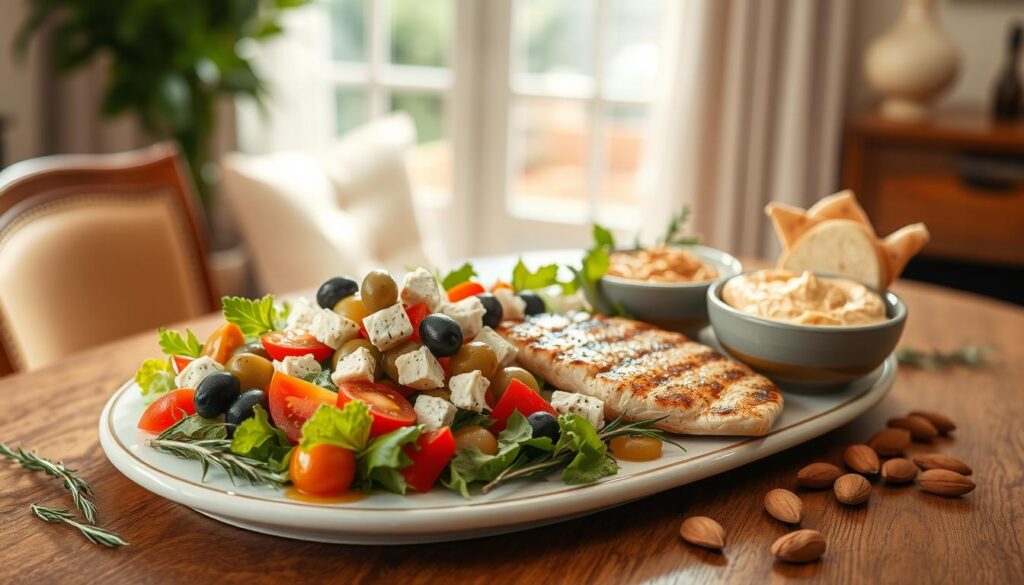
Fresh produce forms the foundation of daily eating. Aim for three or more vegetable servings plus three fruits each day.
Whole grains provide sustained energy throughout your day. Include three to six servings of options like oats or quinoa.
Extra virgin olive oil serves as your primary fat source. Use one to four tablespoons daily for cooking and dressings.
Weekly goals include three servings each of fish, legumes, and nuts. These provide essential proteins and healthy fats.
Poultry and dairy should stay at one serving daily maximum. Red meat appears rarely at just one small portion weekly.
Practical measurements make portion control simple. Use half-cup amounts for cooked vegetables and grains.
Raw vegetables fill about one cup per serving. Protein portions like fish or poultry measure three to four ounces.
Nuts and oils need careful attention due to high calories. A small handful of nuts or measured oil prevents overconsumption.
Red meat stays at three ounces weekly when included. Choose lean cuts like sirloin for better heart health.
| Food Category | Daily Servings | Weekly Servings | Portion Size |
|---|---|---|---|
| Fruits | 3+ | 21+ | 1 medium piece |
| Vegetables | 3+ | 21+ | ½ cup cooked/1 cup raw |
| Whole Grains | 3-6 | 21-42 | ½ cup cooked |
| Extra Virgin Olive Oil | 1-4 tbsp | 7-28 tbsp | 1 tablespoon |
| Fish | – | 3 | 3-4 ounces |
| Legumes | – | 3 | ½ cup cooked |
| Nuts | – | 3 | ¼ cup |
| Poultry | ≤1 | ≤7 | 3-4 ounces |
| Red Meat | – | ≤1 | 3 ounces |
Start by measuring portions to develop visual cues. This helps recognize proper amounts without tools later.
Use extra virgin olive oil instead of butter or margarine. Its healthy fats support better heart function.
Add vegetables to every meal for balanced nutrition. Include at least one serving with breakfast, lunch, and dinner.
Choose whole grains over refined carbohydrates. They provide more fiber and better blood sugar control.
Snack on nuts and fruits instead of processed options. These natural foods satisfy hunger between meals.
Include legumes in soups, salads, and main dishes. They offer plant-based protein and important fiber.
Replace sugary desserts with yogurt or fresh fruit. This reduces inflammation and supports weight management.
Wine remains optional at one glass daily for women or two for men. Non-drinkers should not start for health benefits.
These practical steps make the eating pattern easy to follow. They promote long-term success without feeling restricted.
Meal planning becomes effortless when you embrace this eating approach’s natural rhythm and variety. I discovered that focusing on fresh, whole ingredients makes every meal both nourishing and delicious.
The key lies in balancing different food groups throughout your day. This ensures you get optimal nutrition while enjoying satisfying flavors.
Morning meals set the tone for your entire day. I recommend starting with steel-cut oats topped with fresh berries and flaxseed.
This combination provides excellent fiber and antioxidants. It keeps you full until lunch while supporting digestive health.
Whole-grain toast with nut butter makes another great option. Pair it with a fruit smoothie for complete morning nutrition.
Greek yogurt with walnuts and seasonal fruit offers protein and healthy fats. Egg white omelets with vegetables work well for those preferring savory breakfasts.
Lunch should provide lasting energy without afternoon slumps. Tabbouleh salad with plenty of parsley and tomatoes makes a refreshing choice.
Whole-grain pasta salad loaded with vegetables delivers complex carbohydrates. These help maintain steady blood sugar levels throughout your day.
Roasted portobello mushroom sandwiches offer meaty texture without red meat. Quinoa salmon salad combines omega-3s with complete plant protein.
I often prepare these lunches in advance for busy weekdays. This ensures healthy choices are always available when time is limited.
Evening meals bring families together around nourishing food. Salmon with fresh mango salsa provides lean protein and tropical flavors.
Cod served over lentils creates a satisfying plant-based combination. Roasted chicken with white beans makes a classic comfort food healthier.
Chickpea spinach pancakes offer a creative twist on traditional dinners. Black bean burgers please both adults and children alike.
These recipes emphasize balance between protein sources and vegetables. They make healthy eating enjoyable for the whole family.
Smart snacking prevents hunger between main meals. A handful of unsalted nuts provides healthy fats and protein.
Fresh fruit satisfies sweet cravings naturally. Greek yogurt with dark chocolate chips offers calcium and antioxidants.
Whole-grain crackers with hummus make a crunchy, satisfying option. Raw vegetables with yogurt dip provide vitamins and hydration.
These snacks help maintain energy levels without processed ingredients. They support weight management while delivering important nutrients.
Extra virgin olive oil enhances dressings and cooking throughout your day. Its monounsaturated fats support heart function and reduce inflammation.
Incorporating local, seasonal ingredients keeps meals varied and sustainable. This approach ensures freshness while supporting local producers.
These meal ideas create balance without complexity. They make healthy eating accessible and enjoyable for everyone.
I discovered this eating approach works beautifully across different cultures and traditions. The core principles translate well using local ingredients and cooking styles.
This flexibility makes healthy eating accessible to everyone. You don’t need Mediterranean ingredients to follow the nutritional philosophy.

Asian cuisines can use mung beans instead of chickpeas. Both provide excellent plant-based protein and fiber.
Indian traditions include chole, which aligns perfectly with legume recommendations. East Asian edamame offers similar nutritional benefits.
Traditional dishes become healthier with simple modifications. Use local spices and herbs instead of salt for flavor.
This approach respects cultural food heritage while improving nutrition. It makes the eating pattern sustainable long-term.
The core principles remain consistent across adaptations. Focus on plant-based foods, healthy fats, and lean proteins.
Choose fish over red meat when possible. Include plenty of fresh salads and seasonal fruits.
Natural cooking methods like grilling or baking work best. These preserve nutrients while enhancing flavor.
Studies in Singapore and India show adapted versions maintain health benefits. Cardiovascular and anti-inflammatory advantages remain strong.
Local produce ensures freshness and maximum nutrition. Seasonal ingredients often cost less and taste better.
Environmental sustainability improves when using local foods. This reduces transportation and supports community farmers.
Identify traditional foods that align with the nutritional principles. Many cultures have native legumes, whole grains, and vegetables.
This inclusive approach makes healthy eating practical for diverse backgrounds. It reinforces that good nutrition is universal.
| Cultural Cuisine | Traditional Dish | Adaptation | Health Benefits |
|---|---|---|---|
| Asian | Stir-fry | Use mung beans, less oil | Plant protein, fiber |
| Indian | Chole | Reduce ghee, add veggies | Legume nutrition, antioxidants |
| Latin American | Beans & rice | Brown rice, more vegetables | Fiber, sustained energy |
| Middle Eastern | Hummus | Extra virgin olive oil | Healthy fats, heart protection |
Aromatic herbs enhance dressings without processed additives. Prefer grilled or baked preparations over fried options.
Cultural adaptations ensure the eating pattern remains enjoyable and relevant. This increases long-term adherence and success.
Research shows these adapted versions retain cardiovascular benefits. Anti-inflammatory effects remain strong across different implementations.
Encourage identifying traditional foods that align with the principles. Legumes, whole grains, and vegetables exist in every cuisine.
This approach makes healthy eating inclusive and accessible. It proves good nutrition adapts to any cultural background.
Major clinical trials provide compelling data supporting this eating pattern’s effectiveness. I’ve examined the research that validates why this approach delivers such impressive health outcomes.
Multiple studies demonstrate consistent benefits across various populations. The evidence shows this isn’t just another trend but a scientifically-backed nutritional strategy.
The PREDIMED trial revealed groundbreaking findings about cardiovascular protection. Participants showed a 30% reduction in cardiovascular disease risk compared to low-fat diet groups.
This extensive study involved over 7,000 participants across Spain. Researchers monitored them for nearly five years with remarkable results.
PREDIMED-Plus expanded these findings with additional health benefits. It linked this eating pattern to reduced depression rates and improved metabolic function.
Better cognitive performance and gut health improvements also emerged. The study demonstrated comprehensive wellness advantages beyond heart protection.
Other research confirms these findings across global populations. Studies show consistent results in different cultural and geographic settings.
The magic lies in how components interact rather than individual foods. Nutrients create a choir effect where the whole exceeds the sum of parts.
Unsaturated fats from olive oil enhance antioxidant absorption from vegetables. This combination fights inflammation more effectively than either nutrient alone.
Fiber from whole grains and legumes supports healthy gut bacteria. These microbes then produce compounds that reduce systemic inflammation.
Extra virgin olive oil contains oleocanthal that improves insulin sensitivity. This natural compound works with fiber to stabilize blood sugar levels.
Omega-3 fatty acids from fish boost brain function while reducing inflammation. They work with antioxidants to protect cognitive health long-term.
This nutritional synergy explains why isolated supplements often disappoint. The complete eating pattern delivers benefits that single nutrients cannot match.
This approach outperforms restrictive plans in adherence and results. Unlike keto or intermittent fasting, it doesn’t eliminate entire food groups.
The flexibility allows adaptation to personal preferences and cultural traditions. People find it enjoyable rather than burdensome to maintain.
Research shows higher long-term compliance rates compared to low-fat diets. The Women’s Health Initiative demonstrated limited benefits from fat restriction alone.
Palatability plays a crucial role in sustainable eating habits. Flavorful meals with olive oil, herbs, and spices increase satisfaction.
Studies confirm a 20% lower premature death risk over decades of follow-up. This eating pattern supports longevity through multiple protective mechanisms.
Anti-inflammatory and antioxidant properties provide systemic protection. They guard against chronic conditions while supporting overall vitality.
The scientific backing solidifies its status as a superior nutritional approach. Evidence continues to accumulate supporting its comprehensive health benefits.
When evaluating popular diets, I find most fall short in either sustainability or scientific backing. This nutritional approach consistently demonstrates superiority through comprehensive research and practical implementation.
Its balanced nature makes it more effective than restrictive plans. The flexibility allows adaptation to various lifestyles while delivering proven health outcomes.
Low-fat diets dominated nutritional advice for decades but ultimately disappointed. Large trials showed they failed to reduce heart disease risk significantly.
This eating pattern reduces cardiovascular risk more effectively than fat-restricted approaches. The PREDIMED study demonstrated a 30% lower risk compared to low-fat recommendations.
Unlike temporary fad diets, this approach remains sustainable long-term. Its balance and enjoyment factor prevent the burnout common with keto or paleo plans.
Restrictive diets often eliminate entire food groups unnecessarily. This nutritional philosophy includes diverse foods while emphasizing quality and proportion.
The environmental advantages make this approach particularly valuable today. Reduced greenhouse gas emissions occur naturally with its emphasis on plant-based foods.
Lower water and land use compared to animal-heavy diets helps conservation efforts. This alignment with planetary health has earned names like “Planeterranean diet” among researchers.
I appreciate how this eating pattern supports both personal and environmental wellness. The reduced environmental impact comes naturally through its food recommendations.
Plant-forward eating patterns generally show better sustainability metrics. This approach maximizes nutrition while minimizing ecological footprint.
U.S. News & World Report consistently ranks this as the top diet overall. It earns first place for mental well-being, inflammation reduction, and ease of following.
Major health organizations endorse this nutritional approach for cardiovascular prevention. The American Heart Association recommends it for heart disease risk reduction.
This recognition stems from decades of research across diverse populations. Studies confirm broad health benefits that remain consistent across demographics.
The combination of scientific support and practical implementation makes it optimal. No other eating pattern matches its comprehensive evidence base and real-world effectiveness.
Both personal health improvements and environmental benefits set it apart. This dual advantage creates a superior nutritional approach for modern living.
This time-tested eating philosophy delivers remarkable benefits that science continues to validate. Its approach spans cardiovascular protection, brain function support, and healthy weight management.
The flexibility allows cultural adaptation while maintaining core nutritional principles. This makes the pattern accessible and enjoyable for diverse lifestyles.
I recommend starting with simple changes like using extra virgin olive oil or adding more vegetables. Focus on abundance rather than restriction for sustainable success.
Consult healthcare providers for personalized guidance, especially with specific health conditions. This nutritional approach consistently earns top rankings from health organizations worldwide.
Embracing this way of eating offers a rewarding journey toward better vitality and well-being.